
Guide · Wellness travel ·
Forest Bathing: What It Is and How to Try It in Australia
This publication shares ownership with PeptaraLabs, Lab Ranked Agency, and Dental Link.
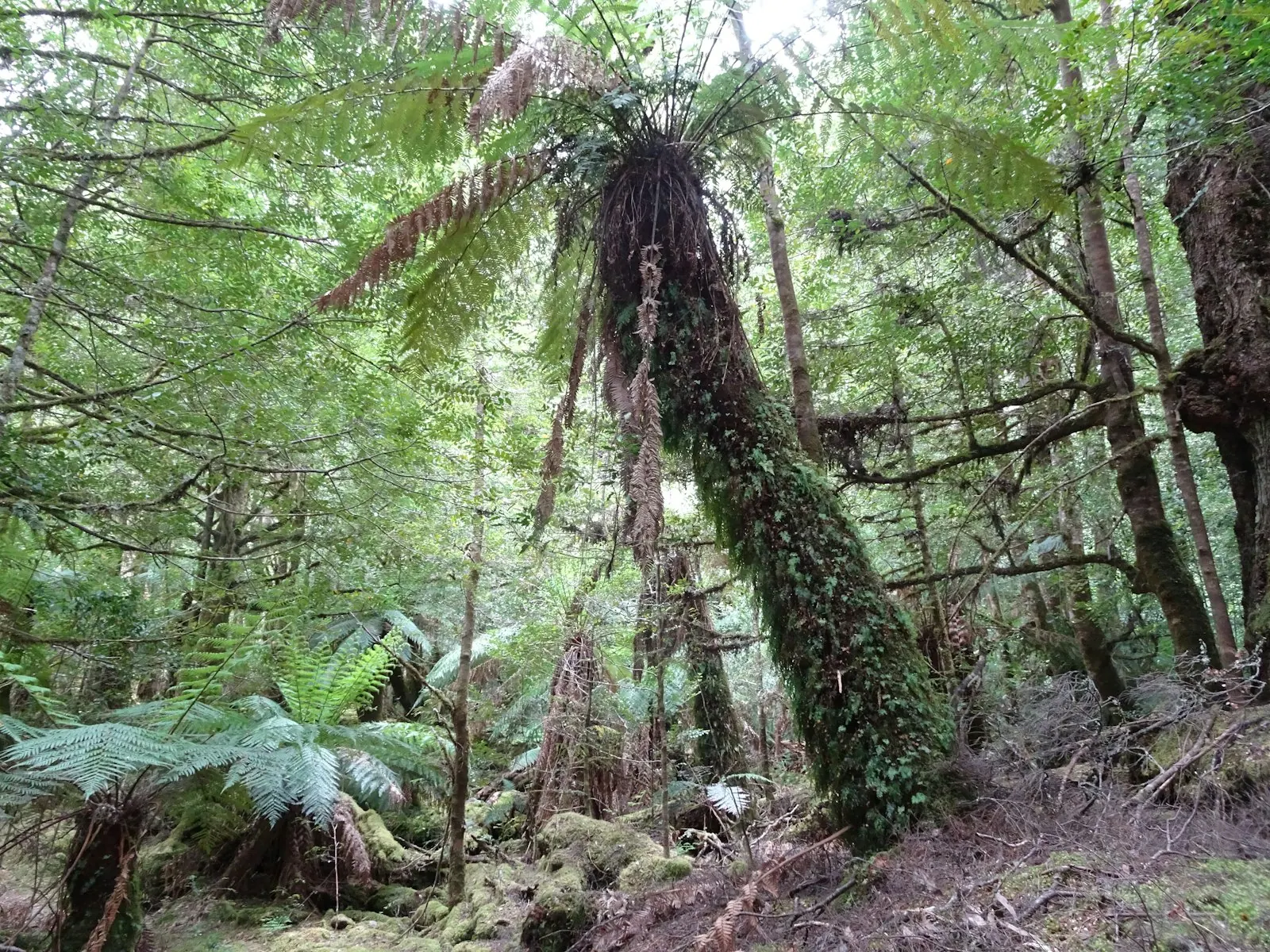
Forest bathing is the practice of spending slow, quiet time among trees and taking in the forest through all five senses. It comes from Japan, where it is called shinrin yoku, and it is not a hike or a workout. Most guides suggest a session of about two hours, at a walking pace slow enough to notice sounds, smells and small details. You do not need special gear, a guide or a long trip to try it.
This guide explains where the practice came from and what researchers have studied. It notes what is still unknown, gives a simple way to try it on your own, and shows where to find a guided session in Australia. It is general information about a travel and wellness practice, not health advice.
Sources for this section: Kaiser Permanente, What is forest bathing?; Forestry England, Your guide to forest bathing; National Trust, A beginner's guide to forest bathing.
Where the term shinrin yoku came from
Kaiser Permanente's health library says the Japanese Ministry of Agriculture, Forestry and Fisheries created the term shinrin yoku in 1982. It translates as "forest bathing" or "absorbing the forest atmosphere". The Global Wellness Institute says Japan made the practice part of a national health programme that same year.
The idea itself is old. Cleveland Clinic notes that walking in forests is not new, but the named practice only dates from 1982. It links shinrin yoku to three Japanese ideas:
- Yugen: an awareness of beauty so deep it is hard to put into words.
- Komorebi: sunlight filtering through the leaves of trees.
- Wabi sabi: finding beauty in things that are imperfect and do not last.
National Geographic reports that researchers in Japan began studying forest bathing in the 1990s.
Sources for this section: Kaiser Permanente, What is forest bathing?; Global Wellness Institute, Forest bathing; Cleveland Clinic, Forest bathing; National Geographic, Where to experience forest bathing.
What forest bathing is, and what it is not
| Forest bathing is | Forest bathing is not |
|---|---|
| Walking slowly, often with pauses to sit | A hike for distance or fitness |
| Using sight, sound, smell and touch on purpose | A plant or bird identification walk |
| Usually done with devices off | A race to a lookout or summit |
| Possible in a local park or bushland reserve | Something that needs a remote wilderness |
A wellness adviser quoted by the Sempervirens Fund describes it as getting into nature and slowing down. You take it in through your senses, just for the sake of being there.
Sources for this section: Sempervirens Fund, An introduction to forest bathing; Forestry England, Your guide to forest bathing; National Trust, A beginner's guide to forest bathing.
What the research has looked at
Forest bathing has been studied for decades, mostly in Japan and China. A 2017 review published in the International Journal of Environmental Research and Public Health screened 127 papers and included 64 studies. It grouped them into physiological, psychological, sensory and framework studies.
The Global Wellness Institute summarises some of the studies researchers have published:
- a 2010 Chiba University field study in 24 Japanese forests with 280 participants, which compared measures such as pulse rate, blood pressure and cortisol in forest and city settings
- a 2017 systematic review of 15 studies with 732 participants that looked at blood pressure in forest and non-forest settings
- a 2017 National Taiwan University study of 128 middle-aged and older participants that measured heart rate, blood pressure and mood after a two-hour session
Sources for this section: Hansen, Jones and Tocchini, Shinrin-Yoku (Forest Bathing) and Nature Therapy: A State-of-the-Art Review (2017); Global Wellness Institute, Forest bathing.
What the research does not settle
Most articles on forest bathing list benefits. It is just as useful to know where the evidence stops. The 2017 review itself says health benefits of time in nature "continue to be currently researched". It calls for longitudinal research, meaning studies that follow people over a long time. It asks for this work worldwide, to build new evidence on links between shinrin yoku and clinical effects.
| What studies have done | What that does not show on its own |
|---|---|
| Measured short-term changes in things like pulse and blood pressure during or after sessions | That forest bathing treats or prevents any illness |
| Studied groups mostly in Japan and China | That the same results apply to every person or every forest |
| Compared forest settings with city settings | How long any change lasts |
So the research so far describes forest bathing as a pleasant, low-cost way to spend time outdoors, not as a treatment. General health questions are a matter for a doctor, not for a travel guide.
Sources for this section: Hansen, Jones and Tocchini, Shinrin-Yoku (Forest Bathing) and Nature Therapy: A State-of-the-Art Review (2017).
How to try forest bathing on your own
This simple order works in a city park, a bushland reserve or a national park. It draws on beginner tips from Forestry England, the National Trust and the Sempervirens Fund.
- Pick a quiet time. Early morning, or a weekday afternoon outside school holidays, usually means fewer people.
- Turn your phone off, or put it on silent and away.
- Find a spot and settle. Sit or stand still, and close or lower your eyes for a minute.
- Notice the air. Take slow, deep breaths. Forestry England suggests letting each breath out last about twice as long as the breath in.
- Listen near, then far. Pick out the closest sounds, then the most distant ones.
- Touch something. The ground, bark or a leaf.
- Walk slowly. Move much slower than a normal walk, and stop when something catches your eye.
- Stay as long as you are comfortable. Two hours is the length most guides suggest. Forestry England says to start shorter and build up.
Afterwards, some people jot down what they noticed. Forestry England offers a free forest wellbeing journal for this.
Sources for this section: Forestry England, Your guide to forest bathing; National Trust, A beginner's guide to forest bathing; Sempervirens Fund, An introduction to forest bathing.
A guided session in Australia
Guided forest bathing is offered in Australian parks by licensed operators. One example is listed by NSW National Parks and Wildlife Service in Sydney's Royal National Park:
| Detail | As listed by NSW National Parks |
|---|---|
| Format | A slow, mindful walk of about two hours with a certified forest therapy guide |
| Grade | Easy; a basic level of fitness |
| Age | Adults and children 12 years and older |
| Meeting point | Royal National Park Visitor Centre |
| Weather | Tours go ahead in wet weather |
| What to bring | Something to sit on, and a small backpack so your hands are free |
| Park entry | A$12 per vehicle per day |
The park is open 7 am to 8.30 pm, but NSW National Parks says it may close at times because of poor weather or fire danger. Check the park alerts before you go.
Sources for this section: NSW National Parks and Wildlife Service, Guided forest bathing experience in Royal National Park.
Australian forests to try it in
You do not need a famous forest. Any quiet place with trees works. If you are travelling, some of the walks in our other guides pass through forest that suits a slow pace. Tasmania's Parks and Wildlife Service describes myrtle-beech rainforest, eucalypt forest and King Billy pine on the Overland Track, and the short Lake Will side trip there is a relaxed walk. In the Red Centre, the Larapinta Trail is open desert rather than forest, but its gorges and waterholes suit the same slow, sense-first approach.
Watch the conditions. In Australian parks, fire danger and storms can close areas, so check the park's alerts on the day. Our editors also cover slower trips in the wellness escape category and in our note on wellness travel this year. How we choose what we feature is set out on our methodology page.
Sources for this section: Tasmania Parks and Wildlife Service, Overland Track walk notes; NSW National Parks and Wildlife Service, Guided forest bathing experience in Royal National Park.
Forest bathing with children
Forestry England says forest bathing can suit children as well as adults and suggests starting with short sessions, with adults supervising. The NSW Royal National Park guided walk is open to children 12 and older.
Sources for this section: Forestry England, Your guide to forest bathing; NSW National Parks and Wildlife Service, Guided forest bathing experience in Royal National Park.
Frequently asked questions
What is forest bathing?
Forest bathing is a Japanese practice, called shinrin yoku, of spending slow, quiet time among trees and taking in the forest through all your senses. It is not a hike or a workout.
Where did shinrin yoku come from?
Shinrin yoku came from Japan. The Japanese Ministry of Agriculture, Forestry and Fisheries created the term in 1982, and it translates as "forest bathing" or "absorbing the forest atmosphere".
How long should a forest bathing session be?
A forest bathing session is usually about two hours, the length many guides suggest. Beginners can start with a shorter time and build up.
Is forest bathing scientifically proven?
Forest bathing has been widely studied, but not settled. A 2017 review of 64 studies called for long-term research worldwide before drawing firm conclusions about clinical effects. It is not a medical treatment.
Can you do forest bathing in Australia?
Yes. You can practise forest bathing in any quiet park or bushland, and guided sessions run in some parks, such as Sydney's Royal National Park.
Do you need a guide for forest bathing?
No. You can forest bathe on your own by slowing down, turning off your phone and using your senses. A guide can help beginners with structured activities.
Sources for this section: Kaiser Permanente, What is forest bathing?; Hansen, Jones and Tocchini (2017); Forestry England; NSW National Parks and Wildlife Service.
Sources
- Hansen, Jones and Tocchini, Shinrin-Yoku (Forest Bathing) and Nature Therapy: A State-of-the-Art Review, International Journal of Environmental Research and Public Health, 2017: www.ncbi.nlm.nih.gov
- Kaiser Permanente, What is forest bathing?: healthy.kaiserpermanente.org
- Global Wellness Institute, Forest bathing evidence: globalwellnessinstitute.org
- Cleveland Clinic, Forest bathing: what it is and its potential benefits: health.clevelandclinic.org
- National Geographic, Where to experience the healing power of forest bathing: www.nationalgeographic.com
- Forestry England, Your guide to forest bathing: www.forestryengland.uk
- National Trust, A beginner's guide to forest bathing: www.nationaltrust.org.uk
- Sempervirens Fund, An introduction to forest bathing: sempervirens.org
- NSW National Parks and Wildlife Service, Guided forest bathing experience in Royal National Park: www.nationalparks.nsw.gov.au
- Tasmania Parks and Wildlife Service, Overland Track walk notes: parks.tas.gov.au