
Guide · Top End ·
Wet Season Darwin: What to Expect in the Top End
This publication shares ownership with PeptaraLabs, Lab Ranked Agency, and Dental Link.
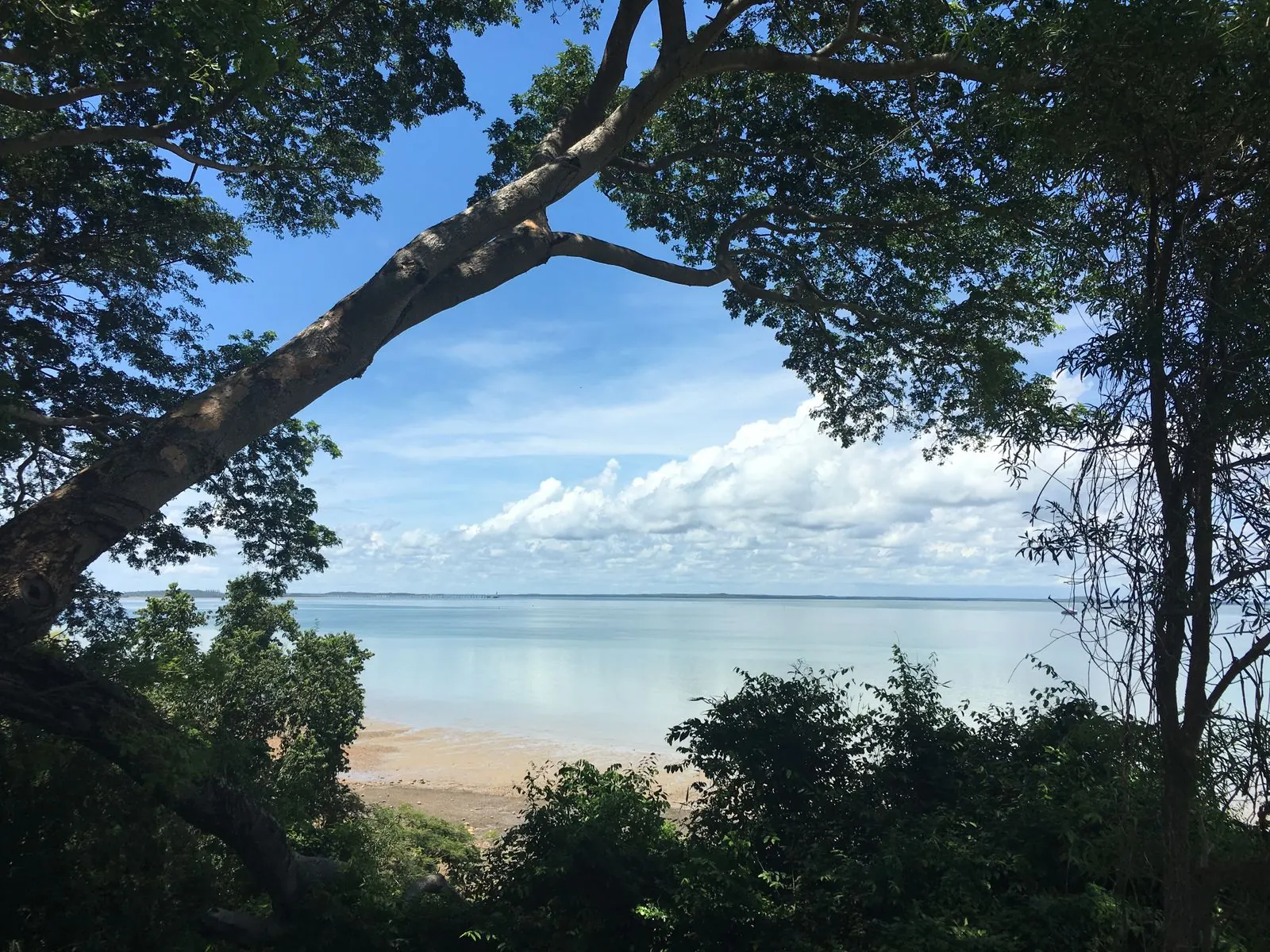
Wet season Darwin weather runs from about November to April. It brings heavy afternoon storms, monsoon rain, high humidity and the official tropical cyclone season. January is the wettest month, with an average of 432.1 mm at Darwin Airport. Temperatures barely change across the year, so the big difference is rain and humidity, not heat. Some remote roads and park areas close, while Darwin itself stays open and the country turns green.
This guide uses Bureau of Meteorology averages to show what each part of the wet looks like. It also covers what closes, what stays open, and how Kakadu's six seasons describe the same months.
Sources for this section: Bureau of Meteorology, Climate statistics for Darwin Airport; Tourism NT, Weather and seasons; Bureau of Meteorology, Australian tropical cyclone season.
Darwin's two seasons, plus the build up
Tourism NT splits the Top End year into two seasons of about six months each:
- The Dry, May to October: temperatures of about 21°C to 32°C, low humidity and little to no rain.
- The Wet, November to April: temperatures of about 25°C to 33°C and humidity that can pass 80 per cent.
The NT Government's living guide adds a third stage that locals talk about: the build up, usually October to November. Heat and humidity rise but regular rain has not arrived, so it can feel like the hottest part of the year. Storms become more common as the weeks pass, and the first real downpour brings relief.
Sources for this section: Tourism NT, Weather and seasons; NT Government, Join the Territory, Top End weather.
Darwin month by month
These are long-term averages for Darwin Airport from the Bureau of Meteorology, with records starting in 1941.
| Month | Mean max | Mean min | Mean rain | Rain days (1 mm or more) | 3pm humidity |
|---|---|---|---|---|---|
| January | 31.8°C | 24.9°C | 432.1 mm | 19.0 | 70% |
| February | 31.5°C | 24.8°C | 372.4 mm | 17.8 | 72% |
| March | 32.0°C | 24.6°C | 313.1 mm | 16.7 | 67% |
| April | 32.8°C | 24.1°C | 102.4 mm | 7.3 | 52% |
| May | 32.1°C | 22.2°C | 20.0 mm | 1.6 | 43% |
| June | 30.8°C | 20.0°C | 1.8 mm | 0.3 | 38% |
| July | 30.7°C | 19.3°C | 1.0 mm | 0.2 | 37% |
| August | 31.6°C | 20.4°C | 4.4 mm | 0.3 | 40% |
| September | 32.7°C | 23.0°C | 16.7 mm | 1.7 | 47% |
| October | 33.4°C | 25.0°C | 69.3 mm | 5.1 | 52% |
| November | 33.4°C | 25.4°C | 146.5 mm | 10.1 | 58% |
| December | 32.8°C | 25.4°C | 255.5 mm | 14.2 | 65% |
| Year | 32.1°C | 23.3°C | 1,732.4 mm | 94.3 | 54% |
What the numbers show:
- The average maximum only moves between 30.7°C and 33.4°C all year. The wet is not much hotter than the dry. It feels hotter because of humidity and warm nights.
- January, February and March bring 1,117.6 mm between them, about 65 per cent of the year's rain.
- July averages 1.0 mm of rain, so Darwin's driest and wettest months differ by more than 400 mm.
- Even in January, an average month has about 12 days without 1 mm of rain.
Sources for this section: Bureau of Meteorology, Climate statistics for Darwin Airport (station 014015).
What a wet season day is like
The NT Government says the wet does not mean constant rain. Many mornings start sunny, then clouds build and an afternoon storm rolls in. Monsoon weather can also bring several days of steady rain and cooler conditions. Tourism NT says sunset skies light up with storm colours and lightning, and the land turns green as waterfalls start to flow.
Locals shift their day to the cooler hours. The NT Government notes that people walk, exercise and run errands earlier, and save the hottest afternoons for somewhere cool.
Sources for this section: NT Government, Join the Territory, Top End weather; Tourism NT, Weather and seasons.
Cyclone season
The Bureau of Meteorology's official tropical cyclone season for the Australian region runs from 1 November to 30 April. Its planning notes say:
- On average there are 10 tropical cyclones in the Australian region each season, with 3 to 4 crossing the coast at cyclone strength, based on seasons since 1980 to 81.
- Since 2000, the average has been closer to 8 to 9 a season.
- Every season has had at least one cyclone cross the Australian coast.
- Quiet spells are often followed by bursts of activity.
- Tropical lows, which are weaker than cyclones, can still bring damaging rain, flooding and storm surge.
For a trip, that means watching the BoM forecast in the days before and during your stay, and keeping plans flexible.
Sources for this section: Bureau of Meteorology, Australian tropical cyclone season.
What closes in the wet, and what stays open
Tourism NT says floods can close some remote Top End sights during the wet. Parks Australia says some areas of Kakadu are closed by flooding in the tropical summer. Four-wheel-drive tracks and river crossings are the usual trouble spots.
Before any drive out of Darwin:
- Check the Road Report NT for road conditions.
- Check Kakadu's access and alerts page, which lists each road, walk and campground as open, closed or open with risks. Cahills Crossing, for example, can be listed as open with risks when water is over the road and levels can change quickly.
- Build in spare days in case a road shuts.
Tourism NT notes that harbour cruises, ferries and scenic plane and helicopter flights run at any time of year. Seeing flooded country and waterfalls from the air is one way to see the wet when roads are cut.
Sources for this section: Tourism NT, Weather and seasons; Parks Australia, Kakadu Seasons; Parks Australia, Kakadu access and alerts; NT Government, Road Report NT.
Kakadu's six seasons
Kakadu's Traditional Owners describe six seasons, not two, based on sky, rain, plants and animals. Parks Australia sets them out with their usual timing and temperature range:
| Season | Usual timing | Temperature | What happens |
|---|---|---|---|
| Kunumeleng, pre-monsoon storms | Mid-October to late December | 24°C to 37°C | Hot and more humid; afternoon thunderstorms; barramundi move to estuaries to breed |
| Kudjewk, monsoon | December to March | 24°C to 34°C | Thunderstorms, heavy rain and flooding; speargrass grows over 2 metres |
| Bangkerreng, "knock 'em down" storms | April | 23°C to 34°C | Clear skies return; windy storms flatten the speargrass; floodwaters recede |
| Yekke, cooler but still humid | May to mid-June | 21°C to 33°C | Morning mists; water lilies on the billabongs |
| Wurrkeng, cold weather | Mid-June to mid-August | 17°C to 32°C | Low humidity; creeks stop flowing; floodplains dry out |
| Kurrung, hot and dry | Mid-August to mid-October | 23°C to 37°C | Hot and dry; thunderclouds start to build again |
Set side by side with the BoM table above, the six seasons line up closely with the rain figures. Kudjewk covers Darwin's four wettest months, and Wurrkeng covers its driest. In Bangkerreng and Yekke, Parks Australia describes floodwaters going down and water lilies covering the billabongs. That is the change from wet to dry as it looks on the ground.
Sources for this section: Parks Australia, Kakadu Seasons; Bureau of Meteorology, Climate statistics for Darwin Airport.
Who the wet season suits
| You want | Wet season fit |
|---|---|
| Storms, green country and waterfalls | Good. Tourism NT says many locals see this as the time the land comes alive |
| Fewer visitors | Good. The NT Government says the dry is the most popular time, when campsites and stays book out |
| Remote 4WD tracks and every walk open | Poor. Some roads and park areas close with flooding |
| Fixed plans with no slack | Poor. Rain and cyclone alerts can change plans at short notice |
Sources for this section: Tourism NT, Weather and seasons; NT Government, Join the Territory, Top End weather; Parks Australia, Kakadu Seasons.
Planning a Top End trip
The Red Centre runs on the opposite calendar. Its best months are May to September. That matches Darwin's dry season, so one winter trip can cover both. See our best time to visit Uluru guide and our Larapinta Trail guide. Looking for somewhere to stay? Our editors' outback retreats and rail journeys pages both cover the Territory, and every guide we publish sits on the guides page.
Rain averages move slowly, but road and park access changes week to week in the wet. Always go by the Road Report NT and Kakadu alerts on the day. To tell our editors about a change, use the email on our contact page.
Sources for this section: Parks Australia, Uluru When to come; Tourism NT, Weather and seasons.
Frequently asked questions
When is the wet season in Darwin?
The wet season in Darwin runs from about November to April. The NT Government also describes a build up, usually October to November, before regular rain begins.
What is the wettest month in Darwin?
January is the wettest month in Darwin, with an average of 432.1 mm of rain at Darwin Airport and about 19 days with 1 mm or more.
Is it worth visiting Darwin in the wet season?
Yes, if you want storms, green country and fewer crowds and can keep plans flexible. Some remote roads and park areas close with flooding, so check road and park reports first.
When is cyclone season in northern Australia?
Cyclone season in northern Australia officially runs from 1 November to 30 April. The Bureau of Meteorology says the Australian region averages about 10 tropical cyclones a season.
How hot is Darwin in the wet season?
Darwin is about as hot in the wet season as in the dry. Average maximums sit near 31.5°C to 33.4°C, but humidity and warm nights near 25°C make it feel hotter.
Is Kakadu open in the wet season?
Parts of Kakadu stay open in the wet season, but some areas close because of flooding. Check Kakadu's access and alerts page before you go.
Sources for this section: Bureau of Meteorology, Climate statistics for Darwin Airport and Australian tropical cyclone season; NT Government, Join the Territory; Parks Australia, Kakadu Seasons and access and alerts.
Sources
- Bureau of Meteorology, Climate statistics for Australian locations: Darwin Airport: www.bom.gov.au
- Bureau of Meteorology, Australian tropical cyclone season: www.bom.gov.au
- Tourism NT, Weather and seasons in the Northern Territory: northernterritory.com
- NT Government, Join the Territory, Top End weather: jointheterritory.nt.gov.au
- Parks Australia, Kakadu National Park, Seasons: parksaustralia.gov.au
- Parks Australia, Kakadu National Park, Access and alerts: kakadu.gov.au
- NT Government, Road Report NT: roadreport.nt.gov.au